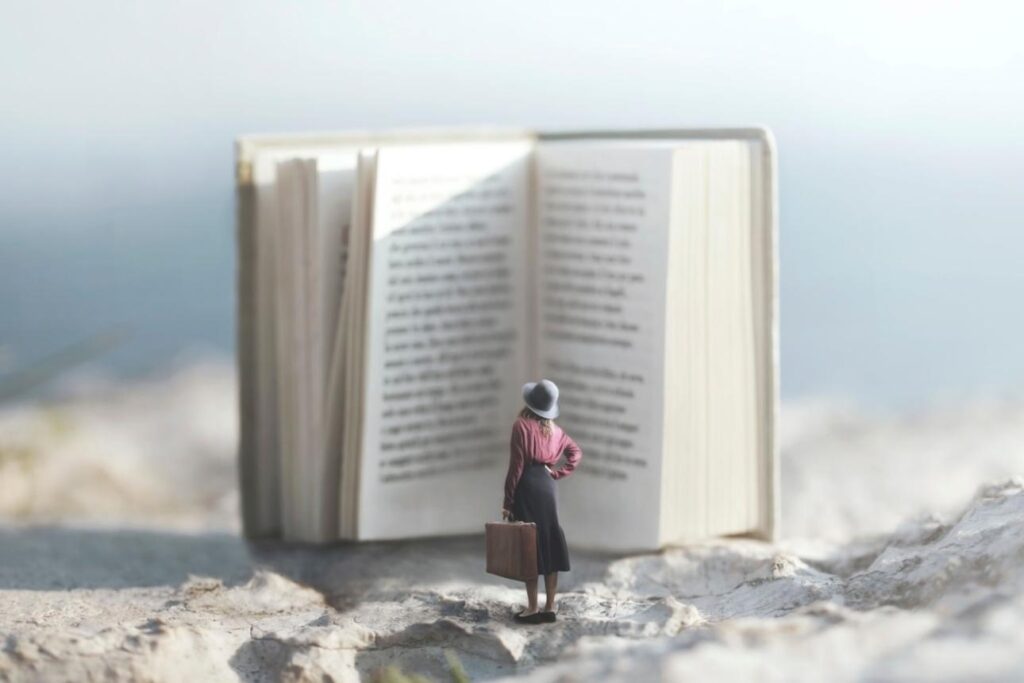
What really stays with you after you finish reading a fiction novel, is the feeling that it leaves behind — the ache of loss, the shock of a revelation, or the moment of a sudden realization. The most unforgettable fiction doesn’t simply tell a story. It makes you feel something deeply personal. And it is this emotional impact in fiction lingers long after the final page.
Here are some memorable emotional scenes in fiction – with a few examples – that leave a lasting impression and make fictional novels unforgettable.
The Moment of Change
Some scenes in fiction are potent because there’s no going back afterward. A death. A betrayal. A shattered belief. These moments can provoke the character experiencing it to act impulsively and permanently alter their lives. Whether or not these scenes are explicitly described, whether the feeling is manifested or subtle, the experience does leave its mark.
Take the case of Vaishali, who, driven by anger and frustration, took an impulsive step that disrupted her life and caused pain, but eventually liberated her.
“That’s when I made my biggest mistake, although I don’t know that I would call it a mistake,” she told her lawyer.
While the moment itself may not have been described in graphic detail, it’s impact is felt throughout the story.
The Moment of Revelation
Most good stories build a steady pace and climax in a moment of revelation. But not always. Such emotional scenes in fiction can occur anywhere in the story. It may not necessarily be a dramatic moment. It could be as subtle as the protagonist revealing the back story, or it could as conspicuous as a statement in a courtroom, uttered in a moment of anger or frustration.
Such moments of truth can disrupt relationships, challenge trust, and force the characters in the story to confront uncomfortable truths. These scenes can completely reshape the emotional landscape of the story.
Here’s an example:
When the owner of Dee Fashions realized that she had jumped in without knowing how to swim, it was too late – well almost.
She sat at her desk and put her head in her hands. She had to crack this show and win the deal. There was no other option. She had invested a lot into this business.
The frustration is expressed in simple yet potent words. Read the full story to know what really happened.
The Quiet Compassion
Not every powerful scene needs to be verbalized. You don’t need a shouting match or a pounding of footfalls. Sometimes the most powerful emotional impact in fiction comes from silence. The feelings are revealed only through a trembling hand, a blank stare, a half-uttered sentence, or even complete stillness.
I found Mom and Dad sitting at the dining table sharing a private moment. They were quiet but I could feel their communication. I could sense that they each knew what the other was thinking.
This beautifully described scene from the book Solidarity speaks of a compassion which is the result of long years of togetherness, and therefore needs no words. Read the full story here.
The Moment of Choice
Some of the most potent emotional impact in fiction comes when characters are forced to make difficult choices. When they are forced into situations where every choice feels wrong. These moral crossroads are especially powerful in psychological thrillers and white-collar crime fiction, where the line between right and wrong becomes blurred.
Readers become emotionally invested because they begin questioning:
- What would I do?
- Would I make the same choice?
What did Psychiatrist Pamela Rodriguez do when she realized that the reason behind her teens’ odd behaviour pointed to her husband? Find out.
The Unexpected Kindness
In emotionally intense stories, small acts of kindness can feel overwhelming. A stranger helps. An enemy shows mercy. A hardened character reveals vulnerability. These scenes stand out because they remind readers that humanity still exists beneath fear, violence, or emotional pain.
“Go home Gurji. I told you Naidu is a good man. He will help us. We have our differences and I don’t know whether we can ever be together again. But I’ve spent ten years as your wife. I care. I am concerned for you and for Mummyji Papaji.
Harleen Khurana, the victim of emotional abuse chose to put her soon-to-be ex-husband in a taxi and send him home, instead of leaving him alone in the restaurant to drink the night away.
The Confrontation That Changes Everything
Not all confrontations are about victory. Sometimes, they’re about honesty. Years of anger, grief, resentment, or love finally rise to the surface in a single emotionally charged moment. When hidden secrets that weigh heavily on the heart are finally expressed, they can make or break relationships. These scenes often become the emotional centerpiece of thrillers, literary fiction, and courtroom dramas.
When Aryan finally told his wife the truth, she said, “There’s nothing to discuss. Not now. I want a divorce and full custody. No visitation.”
Success and Closure
One of the oldest, and most flaunted emotional scenes in fiction is the success of a protagonist after years of struggle. And it still works because it creates a deeply emotional connection with the reader, making the triumph feel personal and earned.
The moment when Lachu and Adil finally return to Pakistan and revisit their ancestral home is profoundly moving. Their journey is not just about crossing borders, but about healing old wounds, reclaiming memories, and finding closure — a victory that fills the reader with the same joy and satisfaction the characters themselves experience.
Emotional Impact in Fiction
There are multiple factors that impact you when you read a fictional story. We just discussed one of them. Another is the strength – or weakness – of the characters in the story, which we’ve already talked about. The most memorable emotional scenes in fiction work because they reveal something deeply human – hope and resilience, grief, vulnerability, guilt, love, fear, sacrifice. That’s the real power of emotional storytelling in fiction. A story becomes unforgettable when it stops feeling fictional and starts feeling real.
Which book had such a strong impact on you, and why? Which scene was the most potent?
Tell us in the comemnts.